Programmatic Brand Safety: How to Balance Protection and Cost
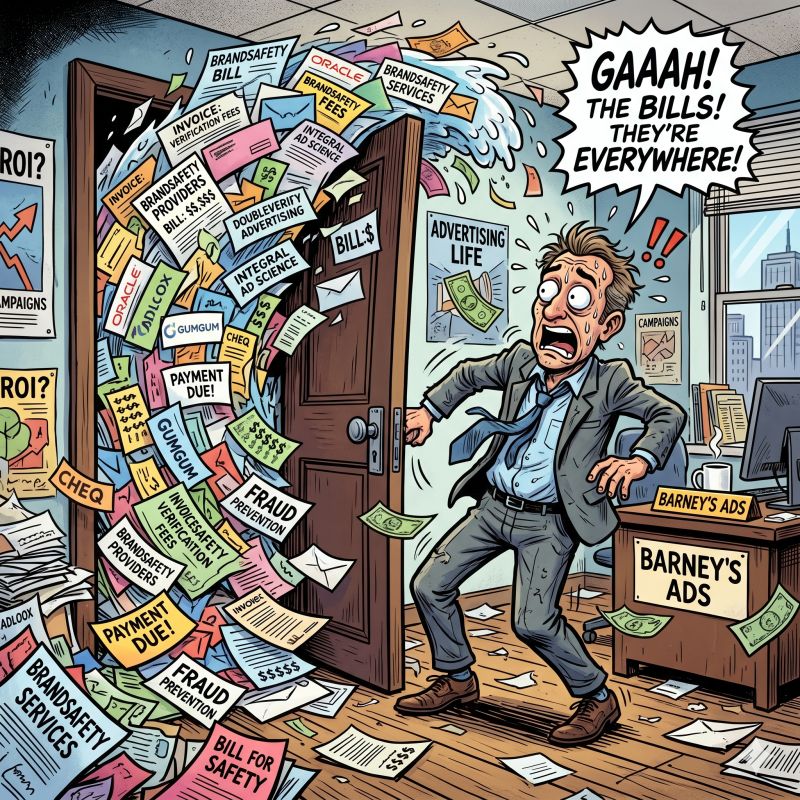
The Open Web is full of valuable content. But even a premium publisher can carry an article that an advertiser considers sensitive. Brand safety is essential. Paying for the same protection several times—or applying it without considering the actual risk—is not.
Here in France, verification specialists such as Integral Ad Science (IAS), Meetric and DoubleVerify have helped make brand safety a standard part of programmatic media buying. Yet two recurring practices can make that protection more expensive than necessary.
Trap #1: activating the same paid brand-safety filters across the supply chain
A Media Trader recently told me: “One of my advertisers is so strict about brand safety that everyone plugs in pre-bid filters. We do it in the DSP, and the publishers or sales houses do it in their SSP.”
Everyone is trying to protect the brand. But if the same paid verification service is applied independently at several stages, the advertiser may ultimately bear overlapping costs (depending on the contracts, billing model and which party pays each fee).
It is worth distinguishing complementary controls from duplicate controls. A publisher's content exclusions, an SSP's pre-bid classification and a DSP's advertiser-specific suitability rules may serve different purposes. Removing one without checking the other could create a coverage gap.
Where should brand-safety filtering happen: DSP or SSP/Curator?
Our practical starting point is simple:
| Buying route | Recommended starting point | Why |
|---|---|---|
| Open Auction | Manage paid brand-safety filters primarily on the DSP side | The buyer can apply consistent advertiser-level policies across a broad supply pool. |
| Curated Deals / PMPs | Consider activating paid pre-bid filters upstream at SSP/Curator level | Unsuitable opportunities can be screened before the deal reaches the DSP, potentially reducing redundant processing and fees. |
This is a configuration recommendation, not a universal rule. Confirm which filters actually run, how they are charged, whether the same risk categories and thresholds are covered, and whether the DSP still needs independent advertiser-specific exclusions.
When configured correctly, upstream filtering may improve the quality of bid requests reaching a DSP, support more efficient bidding and reduce overlapping verification costs. It may also affect throttling and bid-request efficiency, but the outcome depends on each platform's algorithms and commercial setup.
Trap #2: paying to secure inventory without assessing its actual risk
Verification vendors often recommend broad pre-bid coverage. That can be entirely appropriate for strict advertisers. But is the risk profile identical across every website, page and content category?
Consider the difference between breaking news or celebrity gossip and content about cooking, technology, weather or sports. News and gossip can contain sensitive subjects that change from one article to the next. Some other categories may offer a more predictable editorial context.
That does not mean cooking, tech, weather or sports inventory is automatically risk-free. A sensitive article, unsafe user-generated content or an unexpected page-level topic can appear almost anywhere. The relevant question is whether the incremental protection of a paid filter justifies its incremental cost on a given supply segment.
For advertisers, the answer should follow their own risk tolerance and brand suitability rules—not a blanket assumption that every impression is equally dangerous.
How to balance brand-safety protection and costs in practice
- Map the chain. Document all active safety controls across publisher, SSP, Curator and DSP, including which ones are paid.
- Audit overlapping fees. Check whether the same provider, taxonomy and risk categories are being charged at more than one stage.
- Separate open auction and curated deals. Decide where each filter provides the most value, while preserving the advertiser's required safeguards.
- Segment supply by observed risk. Compare actual block rates and suitability incidents by inventory group, rather than assuming some editorial categories have zero risk.
- Measure the trade-off. Monitor verification costs, bid rates, blocked impressions, campaign delivery and brand-safety incidents before and after changes.
There is a useful parallel with our analysis of whether DSPs are really optimizing campaigns: the best outcome is not simply to tick a KPI box, but to challenge the way the buying system reaches that result.
And because inventory quality extends beyond content classification, our research into Made-for-Advertising (MFA) websites explains why a broader supply-quality strategy also matters.
The GreyFox Ads approach: clean supply, simple activation, transparent fees
At GreyFox Ads, we believe the quality French Open Web can deliver real efficiency for advertisers. We may be the smallest ad network in France, but not the least competent.
Our Master Deals are designed to give Media Traders clean supply, smart targeting, simplicity and cost transparency through a curated activation approach. Brand safety should protect a campaign—not quietly multiply its costs.
For a broader view of how upstream curation works, explore our programmatic curation expertise.
Want brand-safe, cost-efficient programmatic campaigns in France?
Let's discuss curated Video and Display inventory, brand-safety requirements and transparent activation costs for your French media plan.
Contact GreyFox AdsExplore the Master Deal