First-Party Data in Programmatic: Why We Need a More Open Data Marketplace
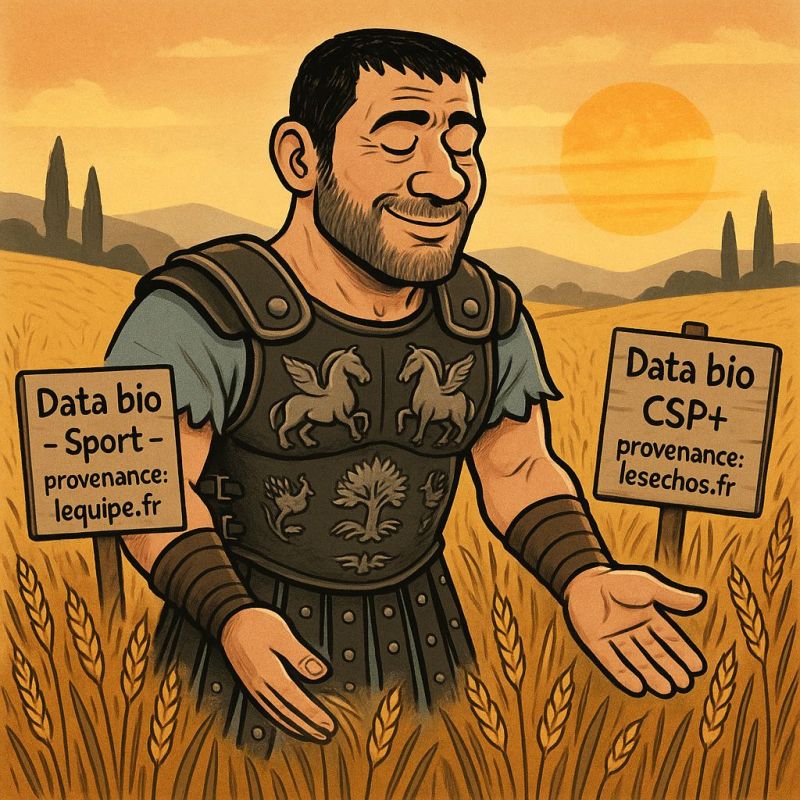
For more than 15 years, digital advertising has promised the right message, to the right person, at the right time. But there is a question we still struggle to answer: where did the audience data come from, and how much of its value reaches the original data owner?
The programmatic data puzzle: who really knows the audience?
We have never lacked audience segments in programmatic advertising. We have lacked a simple way to understand their provenance, quality, availability and economics. An advertiser may own an excellent customer audience but have limited scale. A publisher may understand its readers exceptionally well but struggle to activate that knowledge beyond its own inventory. Meanwhile, large third-party data catalogs offer reach without always offering the same level of visibility into collection methods.
Here in France, this problem is particularly interesting because retailers, specialist publishers and media groups have distinctive audience relationships that deserve to be valued beyond a single website or advertising format.
First-party, second-party and third-party audiences: three different trade-offs
| Audience category | Main advantage | Typical limitation |
|---|---|---|
| Advertiser first-party audiences | Direct relationship with customers and prospects; often high relevance | Limited reach, especially for brands with relatively little website traffic; activation requires permissions and matching |
| Publisher audiences shared with buyers | Strong editorial or behavioral signals: sports, business, gaming and more | Frequently confined to the publisher's inventory or its approved audience-extension partnerships |
| Third-party data providers | Potentially broad coverage across the advertising ecosystem | Data provenance, methodology and freshness can be difficult to audit |
In the original discussion, I described publisher audiences as second-party audiences. Strictly speaking, second-party data generally means another organization's first-party data shared directly under an agreement (the classification depends on the contractual relationship and collection context).
Consider a sports publisher such as L'Équipe, a business title such as Les Echos, or a gaming site such as jeuxvideo.com. Each can generate valuable contextual and audience signals. But those signals do not automatically become available to every buyer on every site.
For a related way of extending audience relevance beyond an advertiser's own website, see our article on 1.5-party data and first-party audience extension.
What if audience data could flow directly into DSPs?
Here is the proposal: let authorized publishers and advertisers make their audience segments discoverable and activatable in participating DSPs, with clear ownership, eligibility rules, activation conditions and a visible percentage-based fee.
Imagine a media trader browsing a DSP and seeing an offer like this:
Rugby Interest Audience · Source: lequipe.fr · Data fee: 20% · Activation: approved inventory and buyers only
This is a hypothetical example of a commercial listing, not a claim that L'Équipe currently offers this exact product or fee.
The buyer could compare it with other audience options based on declared source, permitted use, effective CPM, coverage and measured performance. The data owner could set exclusions and monitor usage, rather than losing visibility once a segment enters a chain of intermediaries.
This is not the same as uploading raw customer records into an unrestricted exchange. A viable model would use privacy-preserving matching, controlled activation and contractual restrictions, with personal data processed only where a valid legal basis and applicable permissions exist.
Why would this matter for the Open Web?
More transparency. Buyers could see who originated a segment and how the data fee is calculated, instead of treating every audience label as a black box.
Better incentives for quality. Publishers and advertisers with genuinely useful signals could be rewarded for data quality rather than simply for the number of segments they distribute (quality would still need independent validation).
Fewer unnecessary intermediaries. Directer commercial and technical relationships could simplify the supply chain, although identity, onboarding and measurement partners may still be needed.
New publisher revenue. A publisher could potentially monetize permitted audience signals beyond its own ad slots, without necessarily bundling every data opportunity with its media inventory.
More options beyond walled gardens. An interoperable marketplace could give agencies another route to high-quality audiences across the Open Web, including the French market.
Better inputs for algorithmic buying. Transparent segment metadata could help automated selection tools compare audience opportunities, provided their performance and consent constraints are machine-readable. The Trade Desk's Audience Unlimited is one example of why automated audience selection is becoming a relevant topic—not evidence that this proposed marketplace already exists.
The four obstacles nobody should underestimate
1. Technical integration. Segment onboarding, identity resolution, APIs, reporting, billing and permissions need to work across DSPs, data owners and other partners. Fragmentation is a real operational cost.
2. Competitive safeguards. Publishers and advertisers may want to prevent specific competitors or buyer categories from using sensitive audiences. The marketplace would need enforceable buyer and campaign controls, comparable in spirit to some inventory-access controls already used by SSPs.
3. Privacy and consent. A transparent fee does not make a segment lawful to share. In Europe, GDPR and ePrivacy obligations, purpose limitation, consent where required, data minimization and retention must be designed into the workflow.
4. Business-model change. Many publishers are used to selling media and data together, while advertisers are not necessarily organized as data providers. Both would need new commercial rules, governance and measurement.
Publisher alliances could share some infrastructure costs; advertisers might delegate operational management to their agencies or approved partners. The business case would depend on incremental revenue, not simply the existence of more segments.
A practical roadmap: start small, measure carefully
| Step | What to validate |
|---|---|
| 1. Select a data owner | Identify a publisher or advertiser with a clear first-party relationship and lawful activation rights. |
| 2. Define the segment | Specify its meaning, recency, coverage, quality controls and allowed purposes. |
| 3. Set the commercial terms | Disclose fees, billing units, buyer restrictions and permitted activation environments. |
| 4. Connect the buying workflow | Use a compatible onboarding, clean-room, curator or DSP integration where available. |
| 5. Run a controlled test | Compare reach, effective CPM, conversion or brand outcomes and incremental value against a relevant baseline. |
| 6. Reconcile and iterate | Check audience usage, costs, reporting consistency and privacy compliance. |
Curator Seats can already help with some audience-extension use cases, but they are not identical to a universal data marketplace. For the underlying mechanics, read what programmatic curation and Curator Seats actually do and why publishers open Curator Seats.
The GreyFox Ads perspective: better data, fewer blind spots
At GreyFox Ads, we believe the quality Open Web has real value for advertisers. A market where audience provenance, access conditions and data costs are explicit would be a meaningful step forward—especially for media traders buying French inventory from abroad.
Our Master Deal approach aims to simplify activation of quality French Open Web supply through a curated deal, with transparent costs and carefully selected targeting options. It is not a claim that GreyFox Ads operates the universal marketplace described above; that remains a vision for the industry.
And transparency should apply to media costs as well as data costs. Read our analysis of financial transparency in programmatic advertising.
The takeaway? The future of audience targeting should not be about multiplying opaque data segments. It should be about making trusted, permissioned first-party signals easier to find, evaluate and activate. 💧
Original LinkedIn post: Read the original discussion by Max Legrand.
Activate quality French Open Web inventory with less complexity
Working on audience activation, curation or transparent programmatic buying in France? GreyFox Ads can help you build a practical approach.
Explore the Master DealContact GreyFox Ads