How to Target Programmatic Media Traders: Five B2B Advertising Strategies
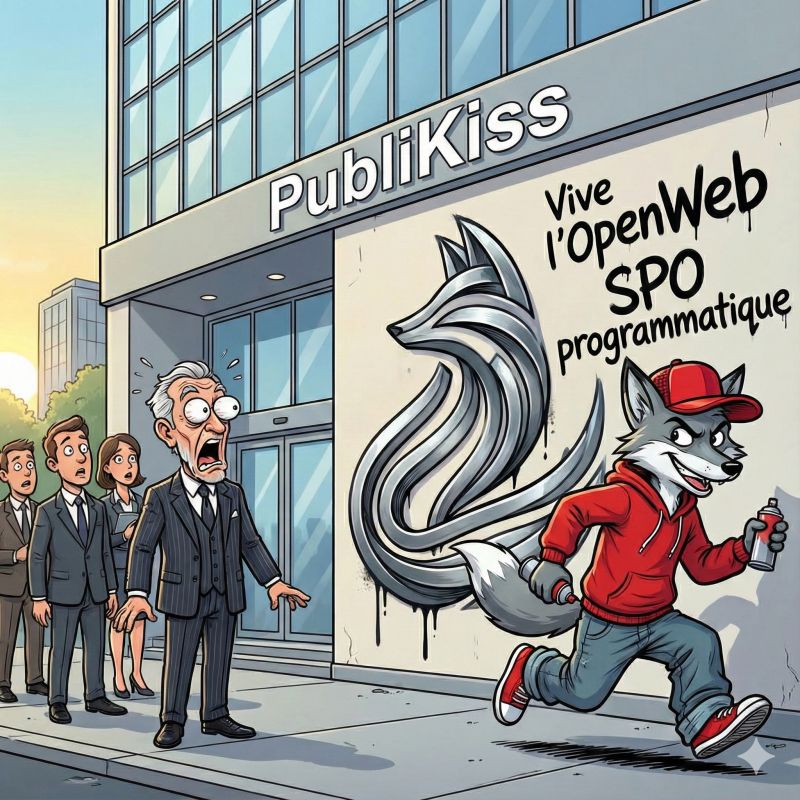
A sales representative at a media sales house recently told me: “It's getting harder and harder to book meetings with programmatic traders...” We know the feeling. We follow up with prospects every month! 😅
1. Why is it so hard to reach programmatic media traders?
Unlike some paid social specialists who work primarily with a handful of platforms, programmatic traders are approached by an entire ecosystem: publishers, resellers, SSPs, DSPs, trading desks, data providers, verification companies and technology vendors.
That's a lot of sales emails, LinkedIn messages and meeting requests. No wonder traders have become selective about which pitches deserve 30 minutes of their day.
So here's an idea: what if AdTech companies used advertising itself to reach the people who buy advertising? 💪
At GreyFox Ads, we're a small French AdTech business, and our marketing budget is limited. Our working estimate is that France has roughly 800 programmatic traders (an internal order-of-magnitude estimate, not an official industry census). For an audience that small, precision matters far more than brute-force reach.
2. Specialist AdTech media: start where the conversation already happens
Industry publications such as Open Garden, mind Media and AdExchanger are natural environments for a B2B AdTech message. Readers are already interested in programmatic advertising, and a useful editorial contribution can establish credibility before a sales conversation.
The catch? Not every specialist publication offers conventional ad placements, and international publications may not support sufficiently precise French-market targeting. Sponsored content, newsletters or partnerships may be alternatives (depending on each publisher's commercial offer).
For us, the strongest starting point is often a useful point of view rather than another product banner. That's also why we publish analyses of programmatic curation and Curators.
3. LinkedIn Ads: target employers and professional roles
LinkedIn can combine employer targeting with professional criteria such as job titles, functions and seniority. In France, an AdTech company might test audiences associated with Publicis Media, Havas Media France, WPP Media, OMD France, Jellyfish or dentsu.
But beware: a broad “marketing” job function is not the same thing as a verified programmatic trader. Job titles vary across agencies, audiences can be small, and platform minimum sizes may limit the combinations available.
Practical idea: create several tightly defined audience hypotheses, tailor the creative to the trader's actual problems, and judge results by qualified visits and meetings—not clicks alone.
4. Geotargeted programmatic display and video: meet traders near the office
Here's the more creative option. Map the major media agency offices, then explore roughly 1 km geotargeting around those locations, with a working-hours schedule such as Monday to Thursday, 9:30 a.m. to 6:30 p.m.
High-impact interstitials or video pre-roll could make the message memorable, provided the inventory is suitable and the ad experience remains respectful.
There is a major caveat: someone near an agency office is not necessarily a Media Trader. Location signals can be imprecise, some platforms impose minimum radii, and targeting must respect applicable privacy rules. Consider this a contextual location hypothesis—not individual employee identification.
For creative and inventory quality, our article on high-impact fullscreen formats explains why screen share matters beyond a simple viewability score.
5. Digital out-of-home: advertising inside office buildings
Some DOOH networks operate digital screens in office buildings and professional environments. Executive Channel Network (ECN) is one example to investigate.
The appeal is straightforward: appear close to where media professionals work, without fighting for a place in an overflowing inbox. The limitations are just as important: building coverage, available inventory, campaign minimums and the proportion of the audience that actually works in programmatic.
6. Digital audio: reach traders through their headphones
What about the hours spent listening to music or podcasts while working? Digital audio could offer another route to this niche audience, combining suitable audio inventory, contextual signals and geographic targeting through a DSP.
It's an interesting hypothesis, not a guaranteed shortcut. Audience data quality, inventory availability, consent requirements and attribution will determine whether the channel is useful.
7. How to test these five channels without wasting your B2B budget
Rather than betting everything on a single channel, treat the brief as a small experiment:
| Channel | Core targeting hypothesis | Main limitation |
|---|---|---|
| Specialist AdTech media | Reach people consuming industry content | Limited formats or France-specific inventory |
| Combine agency employers with relevant professional roles | Imperfect titles, small audiences and cost | |
| Programmatic display/video | Reach audiences near agency offices during working hours | Location does not verify occupation |
| Office-building DOOH | Reach professionals in relevant workplaces | Building coverage and mixed audiences |
| Digital audio | Use relevant listening contexts and geographic signals | Audience precision and measurement |
- Define success: qualified meetings, useful conversations and opportunities—not raw impressions.
- Build channel-specific creatives: address real trader pain points, such as financial transparency or supply quality.
- Start small: run controlled tests where minimum audience sizes and inventory allow.
- Compare quality: evaluate lead relevance, meeting rates and downstream pipeline.
- Iterate: invest more in channels producing genuine conversations, not merely cheap traffic.
In short, use the same discipline that makes Paid Search such a valuable training ground for Media Traders: test, analyse and optimise for a meaningful outcome.
8. How GreyFox Ads thinks about quality programmatic advertising in France
At GreyFox Ads, we're a French programmatic curation specialist. Our mission is to help agencies and Media Traders—especially those working outside France—access quality French Open Web inventory with less operational complexity.
Our Master Curated Deal combines supply-path optimisation, MFA exclusions, brand safety, attention-oriented ad formats, relevant addressability and fee transparency. We focus on direct publisher supply and genuinely useful intermediaries, rather than promising that the lowest CPM always wins.
For a related perspective on finding genuinely new audiences, explore our article on incremental targeting.
The takeaway: the best way to reach a hard-to-find B2B audience isn't necessarily to shout louder. It's to identify where the right people can be reached, make the message genuinely useful, and measure whether it starts a real conversation. 🎯
Looking for a quality programmatic advertising partner?
Need to activate Display or Video campaigns in France with a partner who understands local publishers, curation and Media Traders? Let's talk.
Contact GreyFox AdsExplore the Master Deal