Programmatic Advertising: Who Could Build the Publishers’ Super-App? (2/2) 👑📱
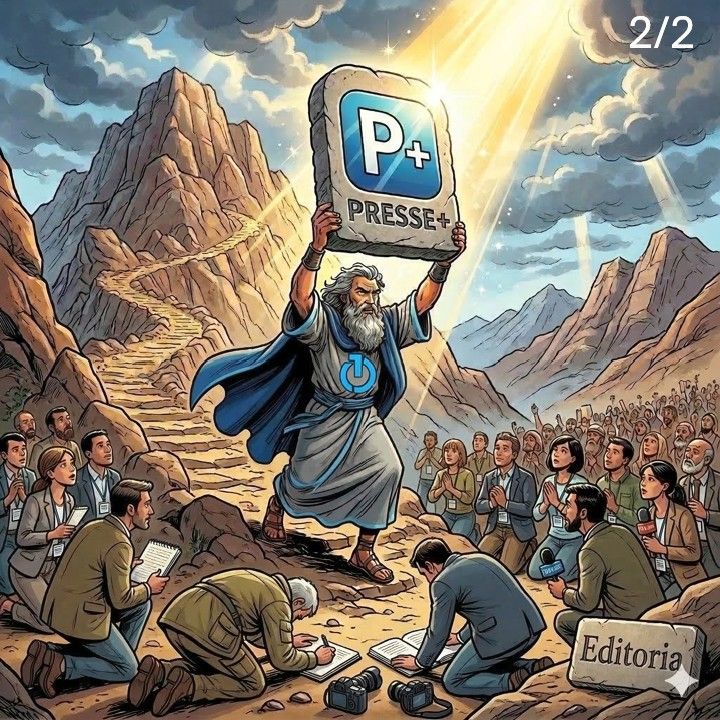
In part one of this series, we looked at ten reasons why publishers might want a shared super-app. 👑📱 But there is a rather important question left: who could actually build it?
1. Publishers themselves, through an alliance 🤝
🟢 The upside: Publishers would retain greater control over the product, its editorial positioning, its data strategy and how value is shared. For a common platform designed to strengthen the Open Web, that is arguably the most logical starting point.
🟠 The stumbling blocks: Running an app that aggregates content from multiple publishers demands serious technical expertise. Then there is governance: agreeing on product decisions, distribution, advertising standards and remuneration across competing publishers is complicated enough in one market — let alone when scaling internationally.
For French publishers, the question is therefore not only whether cooperation makes strategic sense, but whether an alliance could make decisions quickly enough to build a genuinely competitive consumer product.
2. One — or more — technology specialists 👨💻
The music industry offers an interesting precedent: services such as Spotify and Deezer built products that bring content from multiple rights holders together in a single consumer experience. A shared publisher app could follow a broadly similar platform model (though news publishing has different economics, rights and editorial responsibilities).
🟢 The upside: A specialist could bring the technology, product expertise, capital and execution capacity needed to launch and expand internationally.
🟠 The risk: Publishers could end up recreating the very dependency they are trying to escape. If a new platform controls distribution, audience relationships and monetisation, who really wins in the long run?
Two possible models — and one difficult trade-off
| Question | Publisher alliance | Technology-led platform |
|---|---|---|
| Product control | More direct publisher influence | Depends on contracts and governance |
| Technical execution | Requires shared investment and expertise | Potentially faster with an established specialist |
| International scale | Coordination may be difficult | Potentially easier to replicate across markets |
| Long-term dependency | Lower dependence on an external platform | Risk of creating a new gatekeeper |
Neither route is automatically better. The critical questions are who controls the user relationship, who sets advertising standards and how publishers are paid.
Could an unexpected AdTech player take the lead? 🕵️
Now, which third-party company might have a particularly strong incentive to launch a project of this scale?
Hmm… let’s see. Imagine a player that:
- 👨💻 Has deep technology expertise.
- 💰 Has very substantial financial resources.
- 🤝 Already manages significant advertiser media spend — and could help direct demand towards the app.
- 🔐 Is often criticised for having less exclusive inventory than some competitors.
- 💾 Has already experimented with building its own sell-side ecosystem, perhaps even through a CTV operating system.
- 💍 Has a future closely intertwined with the success of the Open Web.
See where I’m going with this? 😉
The original argument deliberately leaves the company unnamed. These are clues for a strategic thought experiment, not evidence that any particular company is developing such a product.
A new way to increase the value of the Open Web? 📱
What if a shared mobile super-app could substantially increase the value of the Open Web’s enormous catalogue of articles, videos and other content — on the device consumers use most?
That is the opportunity. But success would require more than a clever app: publishers would need a compelling consumer proposition, trusted content, sustainable economics and a fair division of power.
For more on the underlying business case, read the ten reasons for a publishers’ shared super-app (part 1), as well as our analysis of how a super-app might help the Open Web and how to revive the French Open Web.
Don't you think this would be worth exploring? 🤩
Based on the original LinkedIn post by Max Legrand. Read the original post for part 1.
Want to work with a quality programmatic partner?
GreyFox Ads combines cleaner programmatic inventory and fragmented targeting through one Master Deal, alongside consulting on programmatic advertising and curation.
Contact GreyFox AdsDiscover the Master Deal