Programmatic Advertising: 10 Reasons for Publishers to Create a Shared Super-App 👑📱 (1/2)
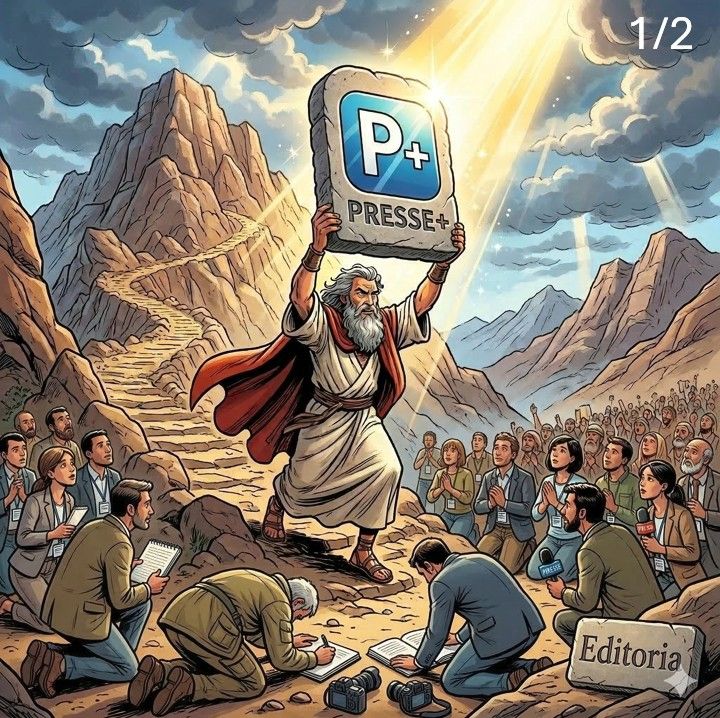
A hundred apps on your smartphone. But how many do you actually use every day? 🤔 If publishers want to earn a place among the handful that matter, perhaps the answer is not to launch yet another app — but to build one together.
1. Beat the Pareto principle 📱
Smartphone users may have around 100 apps installed — but how many do they actually open each day? The striking answer cited in my original post: five. 😱 (An illustrative benchmark, rather than a universal figure: app usage varies by country, definition and study.)
That makes the competition for attention brutal. There are only so many places in someone's daily routine. The publishers who earn one of those places could reap an enormous reward. But to get there, they need a truly exceptional content and value proposition. ⭐⭐⭐⭐⭐
2. Authenticity: a place where not just anyone can publish anything ✅
Imagine a shared app where editorial accountability actually means something. Not an endless feed where anyone — or any bot — can publish anything.
In a world increasingly flooded with AI-generated material and fake news, verified journalism and clearly identified publishers could become a genuine competitive advantage. 🤖📰 The promise would be simple: content you can trust, from sources you can identify.
3. A seamless reading experience ⚡
Preload articles and media. Make navigation feel effortless. Keep content available when the reader loses their connection. A shared app could deliver a consistent, fast experience across participating publishers — including offline reading.
For readers, that is convenience. For publishers, it is a better chance of becoming a daily habit.
4. Standardisation: finally set the advertising rules 📺
One app, substantial aggregated audiences and enough scale to propose its own advertising standards to buyers. Why keep squeezing outdated banner formats into every corner of a page?
Publishers could experiment with advertising breaks closer to the CTV model: immersive full-screen formats, with the option to skip after five seconds. (The impact on user experience and advertising attention would need to be tested rather than assumed.)
That connects directly to the broader question of whether full-screen formats could help revive the Open Web.
5. Stronger targeting capabilities — and human audiences 🎯
A compelling content super-app may give users a stronger reason to create an account and agree to appropriate data uses. With permission and suitable technical agreements, publishers could offer more coherent audience targeting, including activation across other environments such as CTV.
They could also strengthen verification that campaigns reach real people rather than bots. 🚫🤖 (A login is not, by itself, proof of humanity; consent and data-protection rules still apply.)
For the underlying audience strategy, see our analysis of 1.5-party data and publisher audience activation.
6. Independence from discovery platforms ⛓️💥
Imagine a destination readers open directly instead of waiting for Google Discover or a social feed to send them somewhere else.
That could reduce dependence on social publishing — and avoid handing so much engagement and behavioural insight to competing platforms.
The objective is not to abandon discovery channels overnight. It is to give the French Open Web a destination of its own.
7. Transparency for readers and subscribers 🪟
What if readers could understand why a story was recommended? A shared app could adopt a transparent recommendation policy rather than a black-box engagement race.
Subscribers could also see how their money supports the publishers they actually read. In a media market struggling with trust, that kind of clarity matters.
8. Fairer remuneration between publishers 💰⚖️
My proposal: distribute the value generated by each user in proportion to the time they spend with each participating publisher.
It is an intuitive principle — the content attracting attention should receive a fair share. (In practice, any model would need safeguards against gaming, low-quality time-on-page inflation and the unequal economics of different editorial formats.)
9. Pooling development, promotion and AdTech costs 📉
Instead of every publisher funding its own app, identity systems and advertising integrations, why not pool part of the investment?
- Development: build and maintain one shared product.
- Promotion: use participating publishers’ unsold advertising inventory to promote the app at scale.
- Advertising technology: simplify and rationalise the shared AdTech stack.
That is not only a cost-saving argument. It is also a supply path optimisation argument: fewer unnecessary layers and clearer routes to audiences.
10. Follow the example of the super-app contenders 👩🏫
Look at the ambition behind platforms such as WeChat — and the wider competition between major technology groups to become the interface people use for more and more everyday activities.
In my original post, I pointed to OpenAI's ambitions around ChatGPT and Google's distribution advantages through Android and Gemini. These are strategic comparisons, not evidence that either company has already achieved a WeChat-style super-app.
If the biggest technology players see value in becoming a daily destination, why shouldn't publishers at least consider the same strategic question?
So, should French publishers cross the Rubicon? 👑
Ten reasons. One uncomfortable question: what would it take for competing publishers to build a common destination?
Governance, revenue sharing, editorial independence and product execution would be difficult. But the potential upside is hard to ignore. That's quite a few reasons to cross the Rubicon, isn't it? 🤩
For the broader argument, read why a publisher super-app could help save the Open Web and how to revive the French Open Web.
Adapted from the original LinkedIn post by Max Legrand. This is part 1 of a two-part discussion.
Want to work with a quality programmatic partner?
From audience activation to supply path optimisation, GreyFox Ads helps buyers and publishers unlock more value from the French Open Web.
Contact GreyFox AdsDiscover the Master Deal