What Can France's 2015 Digital Advertising Figures Teach Us About the Open Web in 2025?
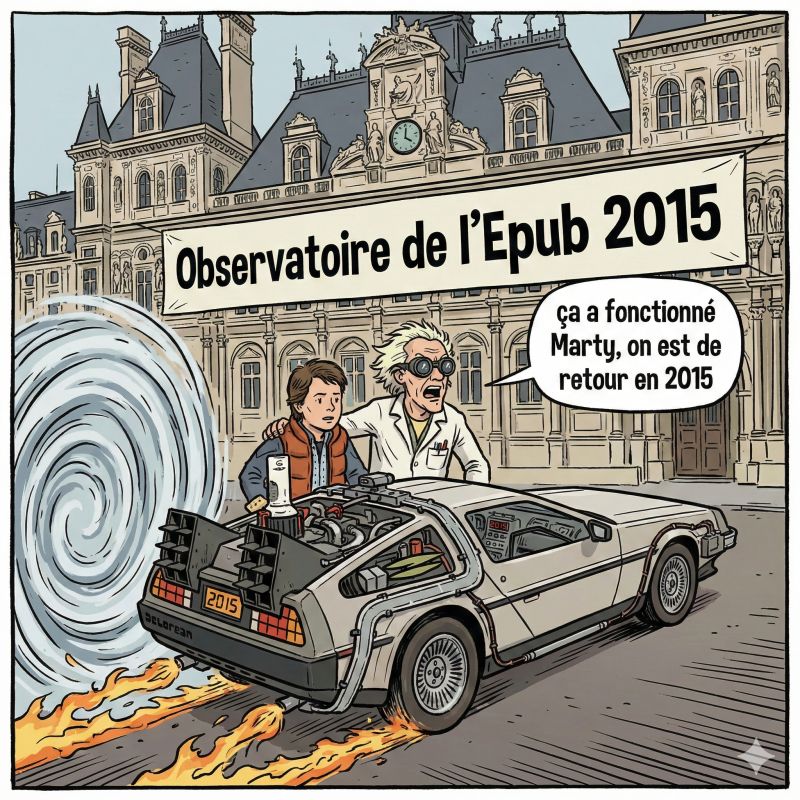
🎉 It's party time for the French Open Web! Or is it? A look back at the 2015 Observatoire de l'e-pub reveals how quickly the balance between traditional display and social advertising could change.
1. What is France's Observatoire de l'e-pub?
The Observatoire de l'e-pub is a reference study of the French digital advertising market published by the SRI (Syndicat des Régies Internet, the French association representing digital advertising sales houses). It helps the industry track where advertisers invest and how different channels evolve.
To understand the challenges facing French publishers today, let's travel back to 2015—when the Open Web's position appeared rather comfortable. 🕰️
2. What did the 2015 French digital advertising figures show?
According to the 2015 figures cited in our original analysis, display, video and social together accounted for 33% of digital advertising investment. Within that combined category, the split was striking:
| 2015 indicator | Figure cited | Interpretation |
|---|---|---|
| Display, video and social share of total digital investment | 33% | Share of the wider digital market in the source analysis |
| Traditional display and video within the combined category | 73% | The larger part of the category at that point |
| Social advertising within the combined category | 27% | A smaller share, but growing rapidly |
Not exactly a victory parade for the social media camp—and perhaps not the news Laurent Solly and his colleagues wanted to hear back then. 😉
Methodological note: these percentages refer to the particular category definitions used in the original comparison; they should not be confused with shares of the entire French advertising market.
3. Why did social advertising's growth rate change everything?
There was just one tiny problem with celebrating too early. 🤏
- Traditional display (excluding social): +4% year on year.
- Social advertising: +31% year on year.
When one segment grows much faster than another, its share can expand dramatically—even if it starts from a much smaller base. Extend the contrast for long enough and it's easy to imagine social taking something like 80% of the broad display, video and social category.
That 80% is a thought experiment, not a forecast: market definitions, growth rates, new channels and advertiser behavior all change over time. Still, the strategic warning was there in 2015.
4. What did the 2025 outlook suggest for France's Open Web?
Fast-forward ten years. At the time of the original French LinkedIn post, the full-year 2025 Observatoire de l'e-pub was due to be released the next morning. The author used the already available first-half results to sketch an indicative picture.
| 2025 estimate discussed in the original post | Approximate figure |
|---|---|
| Social share of the combined display, video and social category | 61% |
| Social contribution to market growth | 45% |
| Streaming and video platforms | 14% |
| TV and radio broadcasters | 8% |
| Retail media players | 6% |
| Remaining Open Web inventory | around 10% |
Quite a turnaround. The apparent winner of 2015 was now fighting for a far smaller share of the category. 📉
Important: these are the categories and approximate projections from the original analysis, not an independently verified breakdown of the final full-year 2025 report. The categories may overlap or be defined differently across editions; don't add the percentages together as if they were a single audited market split.
5. Why is the French Open Web losing advertising share despite its reach?
Here's the paradox: the Open Web still attracts substantial audiences. The Similarweb estimate cited in the original post suggested that France's top 500 websites generated more than 10 billion page views per month collectively.
Page views are not the same as unique users, ad impressions or monetizable inventory (and the estimate is not independently verified here). But they do underline the scale of the audience publishers can offer.
So why does advertiser investment not follow that audience proportionately? Several explanations deserve examination:
- Fragmentation: audiences and supply paths are distributed across many publishers and platforms.
- Buying complexity: advertisers may find consolidated platforms easier to activate and measure.
- Measurement and attribution: proving incremental results across environments is difficult.
- Advertising quality: clutter, low-attention placements and Made-for-Advertising inventory can undermine trust.
- Commercial concentration: integrated platforms combine distribution, identity signals, formats and measurement in one buying interface.
These are possible contributing factors, not a quantified causal decomposition of the 2015–2025 change.
6. What would put the Open Web back at the heart of media plans?
And now for the €12 billion question: what can publishers, agencies, technology providers and advertisers do to make a high-quality Open Web indispensable again?
For starters, the industry could simplify access to premium supply, improve fee transparency, strengthen attention and ad quality, and make it easier to reach fragmented audiences responsibly.
We also need to ask whether programmatic curation can help turn a fragmented inventory landscape into something simpler and more useful for Media Traders.
At GreyFox Ads, we've been thinking about that question for months. We have LOTS of ideas… 🤑 But the full manifesto? That's a story for another article. 😉
7. How GreyFox Ads supports quality Open Web advertising
GreyFox Ads is an independent French programmatic curation company. We believe the Open Web can deliver effective advertising when quality, transparency and buying simplicity come first.
Our Master Curated Deal brings together:
- 📡 Supply Path Optimization (SPO): prioritizing direct publisher supply paths.
- 🚫 Inventory quality: excluding Made-for-Advertising websites and advertising-heavy subdomains.
- 📐 Screen-share optimization: favoring ad formats that occupy meaningful screen space.
- 🎯 Addressability: appropriate cookie-based, cookieless and no-consent targeting approaches, subject to applicable law and platform capabilities.
- 🛡️ Brand safety: filtering unsuitable inventory.
- 👌 Simple activation: making the Media Trader's job easier.
- 🪟 Transparency: clearer fees and supply paths.
The ambition isn't to recreate the 2015 market. It's to give the French Open Web a more compelling proposition for the next decade.
Original French LinkedIn post: Read the original analysis on LinkedIn.
Looking for a quality programmatic advertising partner in France?
Planning display or video campaigns for the French market? Let's discuss quality inventory, efficient buying and transparent supply paths.
Contact GreyFox AdsDiscover the Master Deal